Table of contents
- Abstract
- Why do we need a connector?
- A connector in detail
- Connector info
- Schedule list
- Host field list
- User fields for host systems (CodeSets)
- Conclusion
Abstract
A Connector is a definition of a specific location where a host system stores its data, including necessary authentication information to access the data. A connector will use an API to access planning data that is stored in a database or a file location to access planning data that is stored in a file. Connectors are managed by Setup users. Other users don’t have access to the details of the connectors.
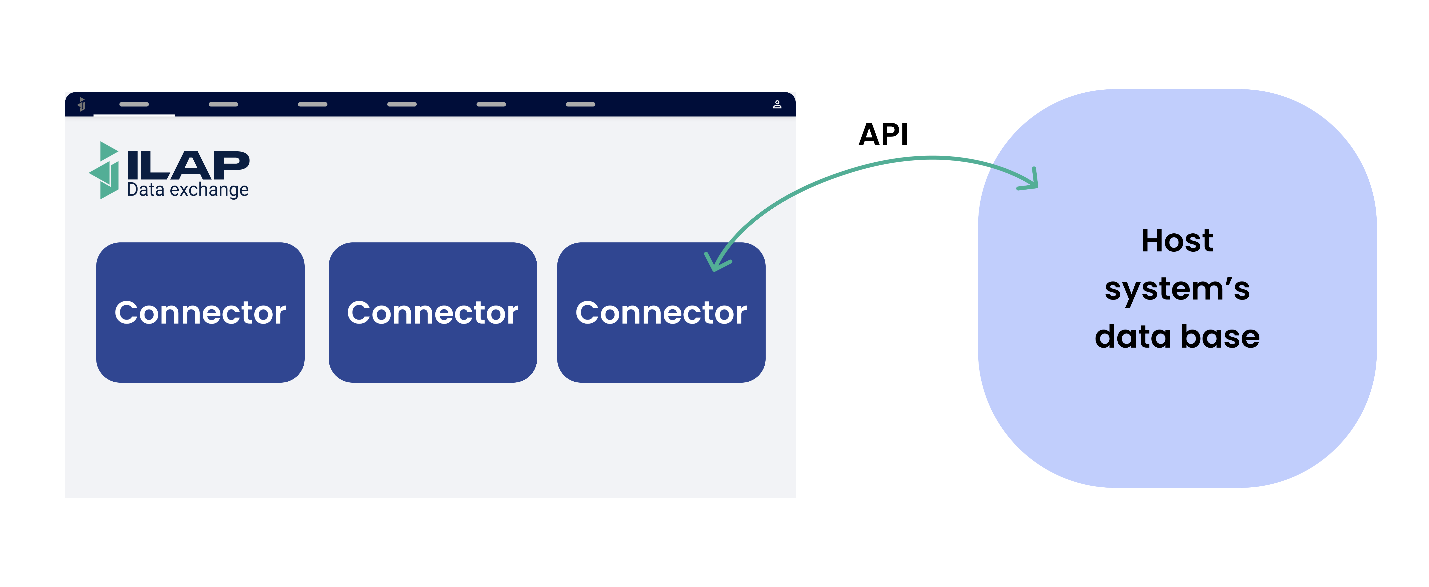
Conceptual visualization of how a connector works: as the connection with the Host system’s database via an API
Why do we need a connector?
ILAP Data exchange needs to understand how to connect to the Host systems that planning data shall be received from and sent to within a transfer. By defining a connector for both the sender and receiver of data, ILAP exchange agreements enable a pathway from and to a specific location.
A connector in detail
Connectors are created and managed by Setup admin, therefore the following information is most relevant to these users. Connectors differ per Host system, but all of them contain the following: connector info, a schedule list and a Host field list.
Connector info
All connectors contain specific information. This is usually the following:
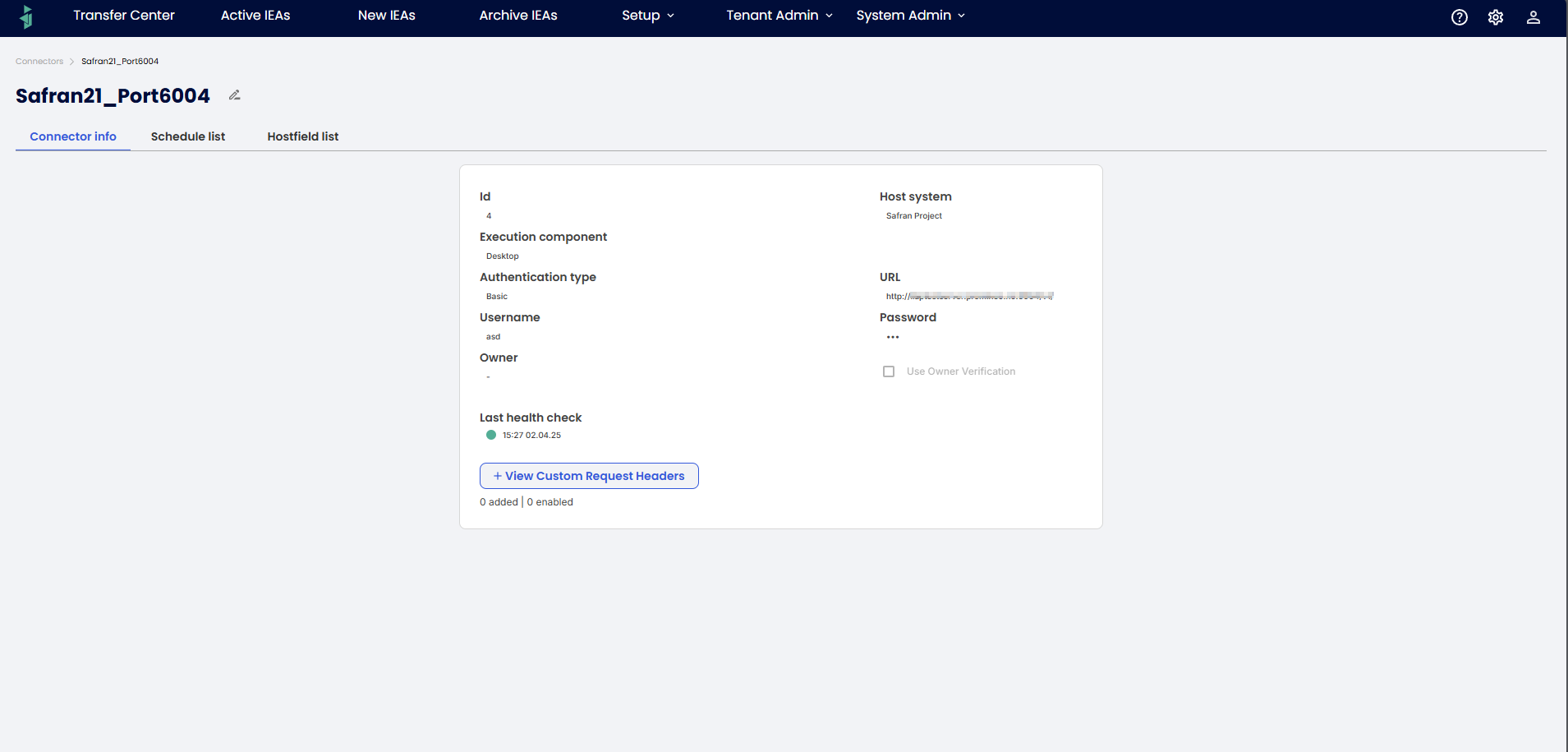
Connector info page of the connector
This section contains details about the connector:
- Connector ID – Auto-generated unique identifier.
- Connector Title – Name provided during creation.
- Host System – System type (e.g., Safran, P6, ILAP Analytics, etc.).
- Authentication Type – Method used to authenticate (e.g., Service Account Token, Azure AD).
- Executing Component – Can be either Desktop Client or Autonomous Component.
- Last Health Check – Shows the latest successful connection attempt timestamp.
- Status Indicators: Connector health is visually displayed using traffic light indicators in the Connector Grid UI

See: Status indicator section of Connector Grid Overview in IDE for more detail.
- Custom Request Header (Optional): Custom headers can be configured to be sent with API calls made by the connector. This is usually provided by your IT Admin when required.
Schedule list
In most cases, many schedules are stored within the connector. The schedule list offers an overview of all these schedules.
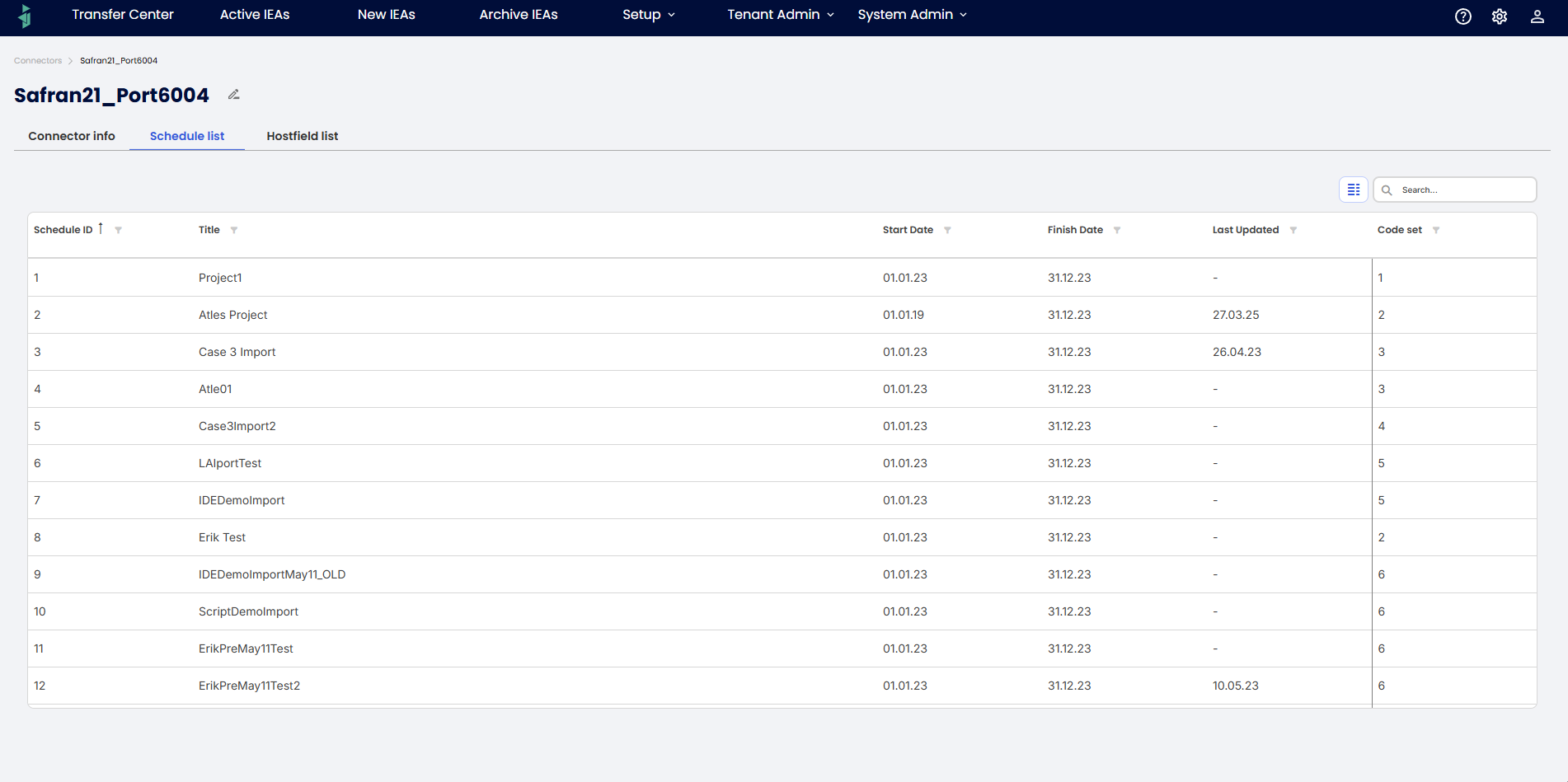
Schedule list page of the connector. Example above is from Safran.
This page shows all schedules fetched through the connector. Each schedule row contains:
| Column | Description |
|---|---|
| Schedule ID | Unique ID of the schedule |
| Title | Name of the schedule |
| Start Date | Start date of the project/schedule |
| Finish Date | End date of the schedule |
| Last Updated | Timestamp of last modification |
| Code Set | User field configuration group |
Note: P6 supports global Activity Codes, which makes one config reusable across many schedules.Grid Features:
- Sortable columns (click column headers)
- Filter each column by value
- Search schedules via keyword
- Reset layout to default column widths
Host field list
The third and last page within the connector gives an overview of all host fields that are available in the connector. Some systems allow multiple definitions for use of host fields, these are referred to as Code set.
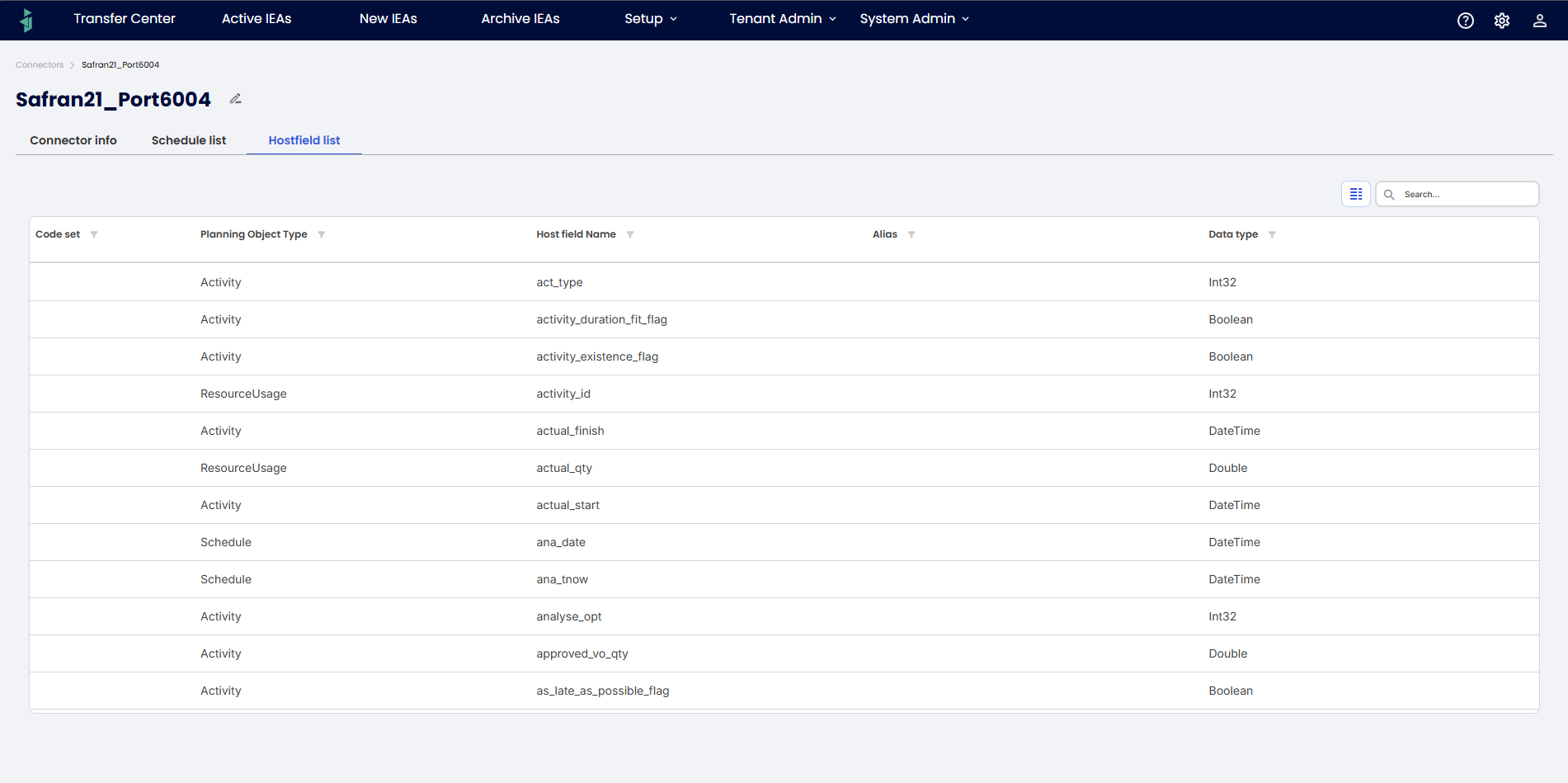
Host field list page of the connector
This tab lists the available planning object fields (host fields) that can be used in templates/configs.
| Column | Description |
| Code Set | Same as above; user field grouping |
| Planning Object Type | Type of planning object (e.g., Activity, Resource, Schedule, etc.) |
| Host Field Name | Actual field name from the host system |
| Alias | Name used in the schedule to refer to the field |
| Data Type | Type of data stored: string, date, number, boolean, etc. |
Grid Functionalities:
- Sort – Click on column headers to sort data.
- Filter – Filter fields by code set, object type, data type, etc.
- Search – Quickly locate specific fields using the search bar.
- Reset Layout – Reset the column layout to default
User fields for host systems (CodeSets)
It is a collection of custom fields (also known as user fields or activity codes) grouped together and retrieved from the schedules available via a connector. These fields are essential for data mapping and are used to define how planning objects (like activities or resources) are represented within your IDE configuration.
Conclusion
Connectors are the foundational building blocks that enable IDE to communicate with external planning systems. IDE Web application equips users with the tools to create and manage connectors reliably. Built-in features ensure easy navigation, accurate setup, and error-free data exchange across systems.
Read more about how to setup connector in details:
- How to set up connector for ILAP Analytics
- How to set up Connector for Safran
- How to set up connector for SAP
- How to set up connector for Microsoft Project
- How to setup connector for P6
- How to setup connector for File Storage
Was this article helpful?
That’s Great!
Thank you for your feedback
Sorry! We couldn't be helpful
Thank you for your feedback
Feedback sent
We appreciate your effort and will try to fix the article